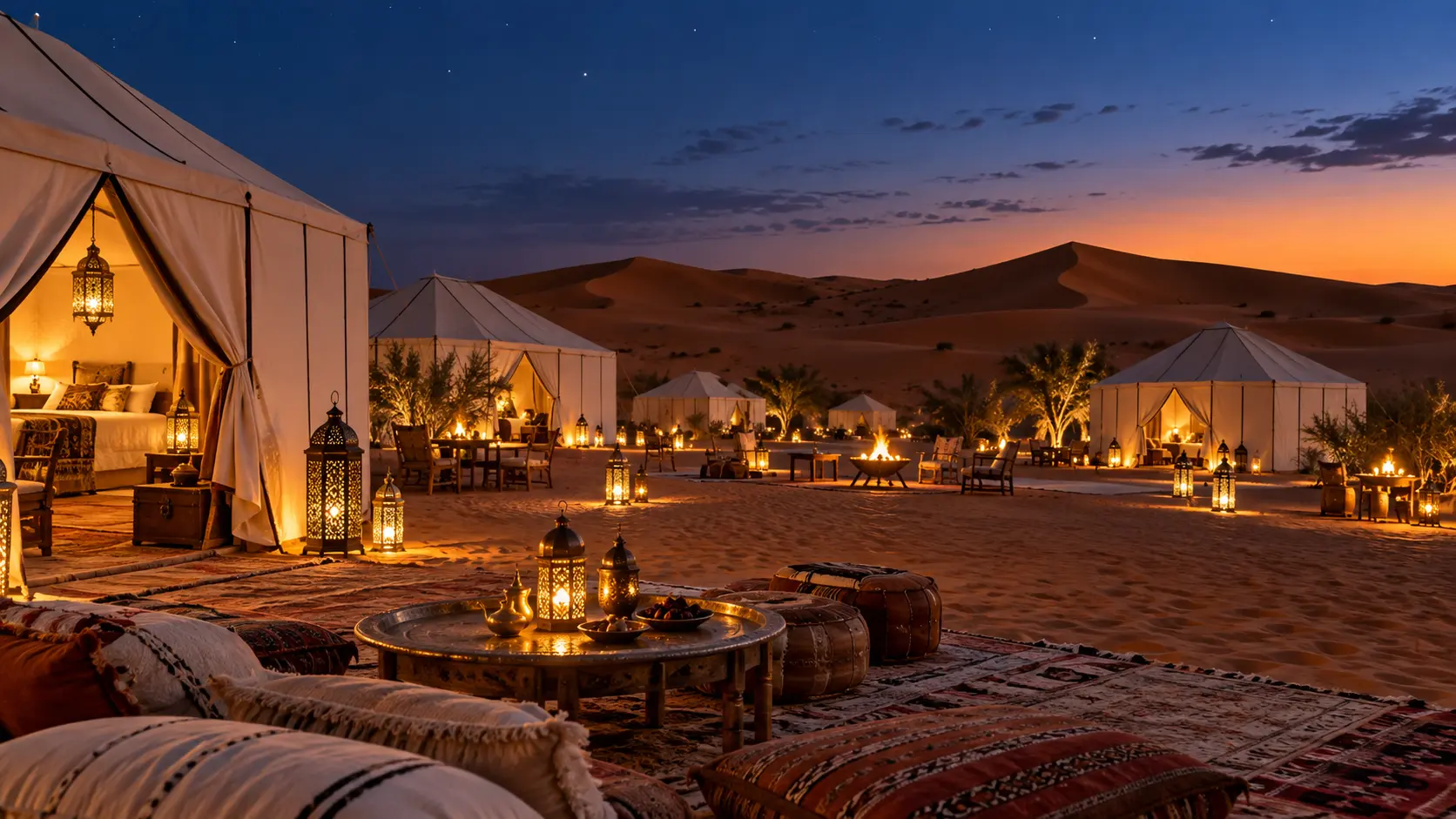
Planning a trip to the Sahara Desert in Morocco? Understanding Merzouga weather is essential before choosing your travel dates. Located beside the spectacular Erg Chebbi dunes in southeastern Morocco, Merzouga has a desert climate with hot summers, mild sunny winter days, cold winter nights, and very little rainfall.
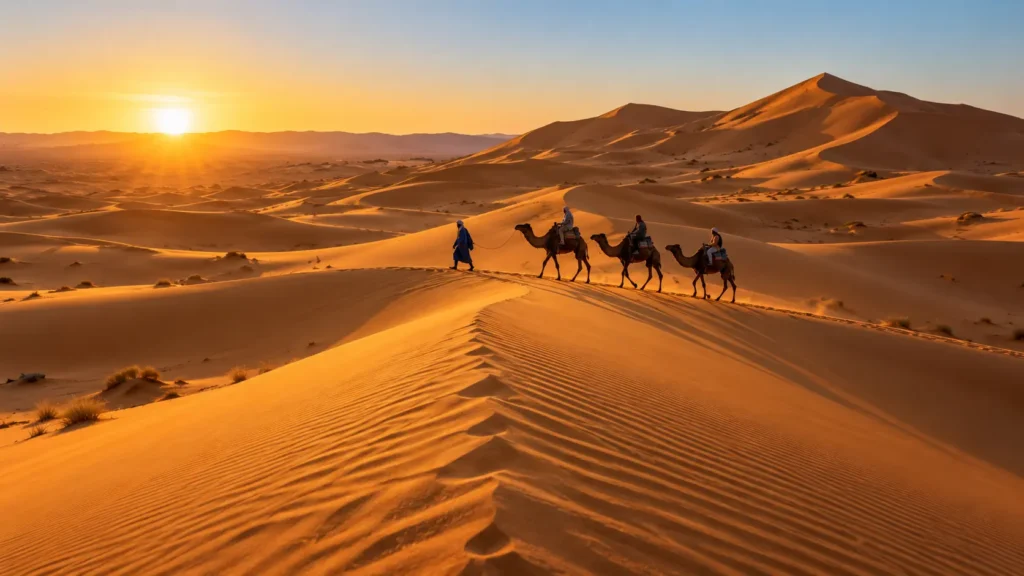
For most travelers, the best time to visit Merzouga is from October to April, when temperatures are more comfortable for camel trekking, exploring the dunes, watching the sunset, and spending a night in a Sahara desert camp.
Among these months, October, November, March, and April offer some of the best weather conditions for a Merzouga desert trip.
What Is the Best Time to Visit Merzouga?
The best time to visit Merzouga depends on the experience you are looking for.
If you want comfortable temperatures for camel rides, desert walks, 4×4 excursions, and outdoor activities, consider traveling during:
March to April – Warm spring days and generally pleasant nights.
October to November – Warm days, cooler evenings, and excellent conditions for exploring Erg Chebbi.
December to February – Pleasant daytime weather but significantly colder nights.
May and September can also be suitable, although daytime temperatures are hotter.
June, July, and August are the hottest months of the year. Temperatures can climb above 40°C during the day, so desert activities generally need to be planned for the cooler early-morning or late-afternoon hours.
Merzouga Weather by Month
Here is a practical overview of typical weather conditions around Merzouga and the Erg Chebbi dunes.
| Month | Approx. Day Temperature | Approx. Night Temperature | Conditions |
|---|---|---|---|
| January | 18–20°C | 3–6°C | Mild days, cold nights |
| February | 20–22°C | 5–7°C | Pleasant |
| March | 24–26°C | 8–10°C | Excellent |
| April | 28–30°C | 12–14°C | Excellent |
| May | 33–35°C | 17–19°C | Hot |
| June | 38–40°C | 21–23°C | Very hot |
| July | 41–43°C | 25–26°C | Extremely hot |
| August | 40–42°C | 24–26°C | Extremely hot |
| September | 34–36°C | 20–22°C | Hot, improving later |
| October | 28–30°C | 14–16°C | Excellent |
| November | 22–24°C | 8–10°C | Excellent |
| December | 18–20°C | 4–6°C | Mild days, cold nights |
These temperatures are approximate climate averages rather than a weather forecast. Desert conditions can change considerably between individual days.
Merzouga in Spring: March to May
Spring is one of the best seasons to visit the Merzouga Desert.
March and April are particularly attractive because daytime temperatures are warm without reaching the intense levels experienced during summer.
This makes spring suitable for many of the classic Sahara experiences, including:
- Camel trekking across the Erg Chebbi dunes
- Watching the sunset from the dunes
- 4×4 desert excursions
- Visiting local villages around Merzouga
- Sandboarding
- Spending the night in a desert camp
- Getting up early to watch the Sahara sunrise
Travelers should nevertheless remember that spring can sometimes bring stronger winds and blowing sand. A scarf or lightweight face covering can therefore be useful.
By May, temperatures become considerably warmer, particularly during the afternoon.*
Merzouga in Summer: June to August
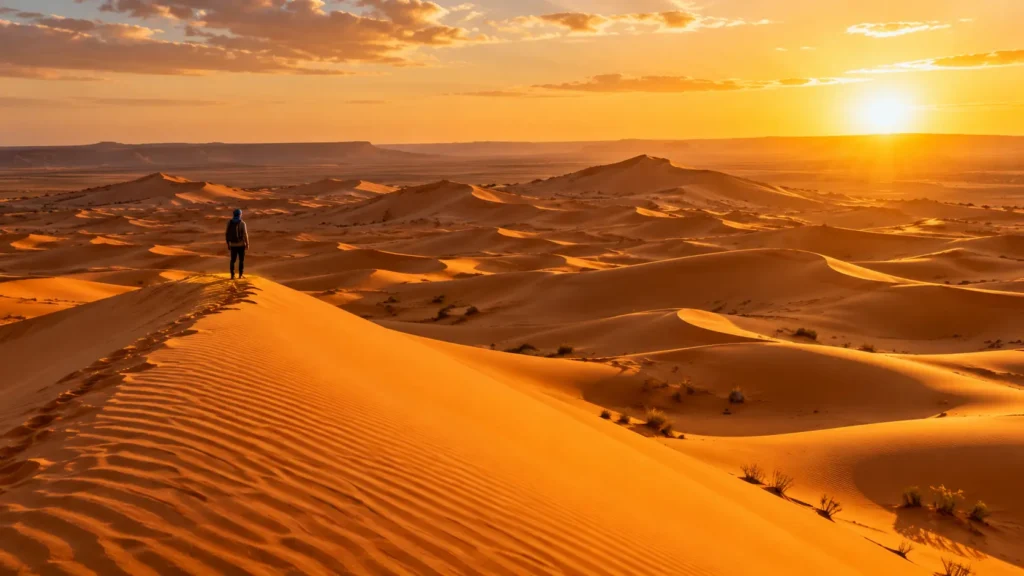
Summer is the hottest season in Merzouga.
June is already very hot, while July and August can experience daytime temperatures above 40°C. The open dunes provide little natural shade, and the sand becomes extremely hot under the afternoon sun.
Visiting Merzouga during summer is still possible, but your itinerary should be adapted to the temperature.
Outdoor activities are better scheduled around sunrise and sunset, while the hottest hours of the afternoon should be reserved for resting.
If you plan to spend a night in the desert during summer, check the facilities offered by your chosen camp and prepare for warm nighttime temperatures as well.
For travelers who are sensitive to extreme heat, spring, autumn, or winter will usually provide a more comfortable Sahara experience.
Merzouga in Autumn: September to November
Autumn is another excellent season for visiting Merzouga.
September can remain hot, particularly at the beginning of the month, but temperatures gradually become more comfortable as autumn progresses.
October is one of the most attractive months for a Merzouga desert tour. Days are generally warm, while evenings become pleasantly cooler.
November is cooler again and is also an excellent month for camel rides, desert excursions, sunsets, and overnight stays in the Sahara.
For travelers who want to combine comfortable weather with the full Merzouga desert experience, October and November are excellent choices.
Merzouga in Winter: December to February
Winter in the Sahara surprises many first-time visitors.
During the daytime, Merzouga can be sunny and pleasantly mild. After sunset, however, temperatures drop quickly.
December, January, and February nights can be very cold, particularly when staying close to the dunes. Temperatures may fall to only a few degrees above freezing.
This large difference between daytime and nighttime temperatures is characteristic of desert environments.
Winter visitors should bring:
- A warm jacket
- Sweaters or fleece
- Long trousers
- Warm socks
- Comfortable closed shoes
- A hat or beanie for cold evenings and sunrise
Do not judge the entire day by the afternoon temperature. You might be comfortable in a T-shirt under the afternoon sun and need several warm layers only a few hours later.
Is October a Good Time to Visit Merzouga?
Yes. October offers some of the most comfortable conditions of the year for exploring Merzouga and Erg Chebbi.
The intense summer heat has normally decreased significantly, while nights are not as cold as they become during winter.
October is particularly suitable for travelers interested in combining camel trekking, sunset views, desert camping, 4×4 exploration, and sunrise activities.
Is December a Good Time to Visit Merzouga?
December can also be an excellent time to visit the Sahara, especially for travelers who prefer cooler temperatures.
Days are generally much more comfortable than in summer. The main consideration is the nighttime temperature.
If you are planning an overnight desert camp in December, bring warm clothes even when the weather feels pleasantly sunny during the day.
Is Merzouga Too Hot in July and August?
July and August are the most challenging months for daytime activities in Merzouga.
Temperatures can exceed 40°C, making long walks or other strenuous activities on the dunes uncomfortable and potentially unsafe during the hottest hours.
Travelers visiting during this period should avoid demanding outdoor activities around midday, carry sufficient water, protect themselves from the sun, and organize desert activities during cooler hours.
Does It Rain in Merzouga?
Rain is uncommon in Merzouga.
The region has an arid desert climate and receives very little precipitation compared with Morocco’s coastal and mountainous regions.
However, rain is still possible. Desert rainfall can occasionally be intense over a short period, so travelers should always follow local weather and road advice when unusual weather conditions occur.
What Should You Wear in the Merzouga Desert?
Your packing list should depend on the season, but several items are useful throughout much of the year.
Bring lightweight and breathable clothing for sunny daytime conditions, comfortable shoes, sunglasses, sunscreen, a hat, and a scarf.
During autumn, winter, and early spring, also pack warmer layers for evenings and early mornings.
Sun protection remains important even when temperatures feel comfortable because you will often spend several hours in open desert terrain.
Best Time for a Camel Ride in Merzouga
Sunset and sunrise are usually the most enjoyable periods for a camel ride in Merzouga.
Apart from providing beautiful views across the Erg Chebbi dunes, these times generally offer cooler temperatures than the middle of the afternoon.
The exact timing changes throughout the year, so departure times should be adjusted according to the season and sunset.
Best Time to Spend a Night in a Merzouga Desert Camp
Desert camps operate during much of the year, but October through April generally offers the most comfortable overall conditions.
March, April, October, and November provide an especially good balance between daytime warmth and nighttime comfort.
Winter can also provide a memorable desert experience, but warm clothing is essential after sunset.
When Should You Visit Merzouga?
For most visitors, the best overall periods are:
March and April for pleasant spring weather.
October and November for warm days and comfortable desert activities.
December to February for travelers who prefer cooler days and do not mind cold nights.
May and September for travelers comfortable with hotter conditions.
June to August for visitors prepared for extreme daytime heat and a schedule centered around mornings and evenings.
There is no single perfect month for every traveler. The best time to visit Merzouga depends on your tolerance for heat and cold and the activities you want to experience.
Experience the Merzouga Desert with Morocco Trip Travel
A journey to Merzouga is one of the highlights of traveling through Morocco. From crossing the golden Erg Chebbi dunes by camel to watching the sunset, enjoying a traditional evening at a desert camp, and waking for sunrise over the Sahara, the experience is completely different from Morocco’s imperial cities and Atlantic coast.
Morocco Trip Travel organizes Merzouga desert tours from Marrakech, Fes, and other destinations across Morocco, with options for private tours, desert camps, camel trekking, and multi-day Morocco itineraries.
Choosing the right season will help you enjoy the Sahara in greater comfort and make the most of every part of your Merzouga desert experience.
Frequently Asked Questions About Merzouga Weather
What is the best month to visit Merzouga?
October and April are particularly attractive months because they generally combine warm daytime temperatures with more comfortable nights. March and November are also excellent options.
What is the best season for the Merzouga Desert?
Spring and autumn generally provide the most comfortable conditions. The wider October-to-April period is also popular for Sahara travel.
Is Merzouga cold at night?
Yes, especially during winter. From December through February, nighttime temperatures can fall to only a few degrees above freezing.
What are the hottest months in Merzouga?
July and August are generally the hottest months, with daytime temperatures frequently exceeding 40°C.
Can you visit Merzouga in summer?
Yes, but itineraries should be adapted to the extreme heat. Outdoor desert activities are best organized around sunrise and sunset rather than during the hottest afternoon hours.
When is the best time for a Sahara desert tour in Morocco?
For travelers visiting Merzouga and Erg Chebbi, October through April generally provides the most comfortable weather, with March–April and October–November among the most favorable periods.
Ready to Experience the Merzouga Desert?
Turn your Morocco trip into an unforgettable Sahara adventure with our 3-Day Marrakech to Merzouga Desert Tour. Travel through the Atlas Mountains, visit Aït Ben Haddou, explore the Dades and Todra valleys, enjoy a camel ride across the Erg Chebbi dunes, and spend the night in a desert camp.
Book your Merzouga desert adventure today with Morocco Trip Travel.